

Where the Money Actually Leaks: A Practical Guide to Fleet Cost Control
You can control idling, routing, driving style and how much of your mileage you can actually account for. That’s where the savings live.
You can control idling, routing, driving style and how much of your mileage you can actually account for. That’s where the savings live.
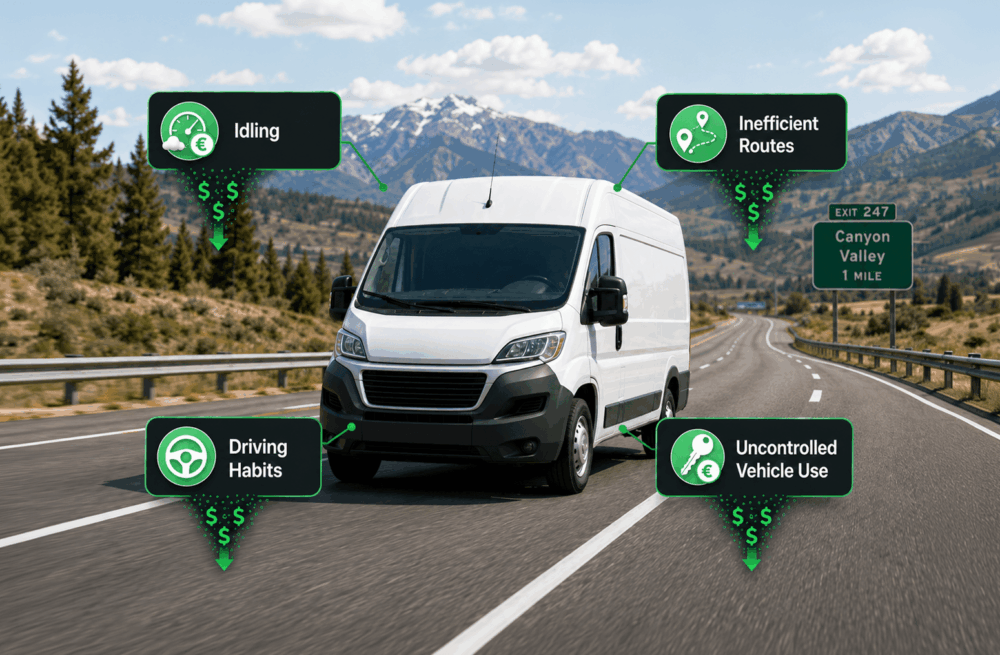
Fuel is one of the largest and most unpredictable costs in any fleet. It typically accounts for between a quarter and a third of total operating expense. You can’t control the price at the pump, which is exactly why so many operators treat fuel cost as weather: something that happens to you. It isn’t. While the price per gallon is out of your hands, much of what surrounds it is within your control. This includes how far vehicles travel, how they’re driven, and how much mileage you can account for.
Most fleet budgets don’t bleed from one obvious wound. They leak from dozens of small ones that are individually easy to miss and collectively expensive. The first move in recovering margin is simply being able to see where it goes. You can’t fix a leak you can’t find.
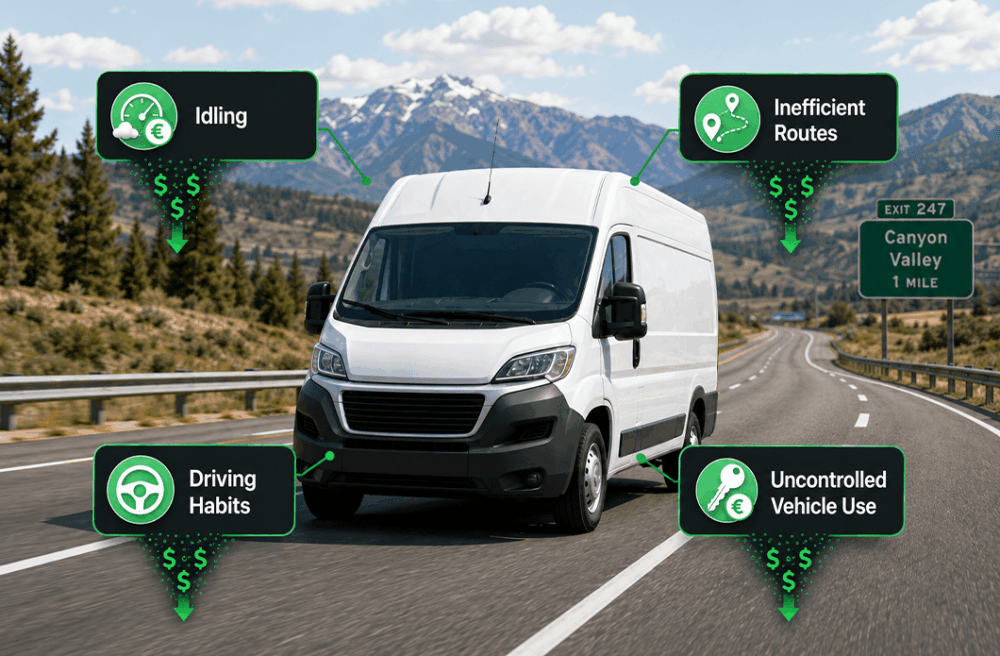
Visibility only matters if it changes what people do. The fleets that genuinely cut costs use their data to coach rather than simply to record. Seeing that a vehicle idled for two hours is interesting; doing something about it is what saves the money.
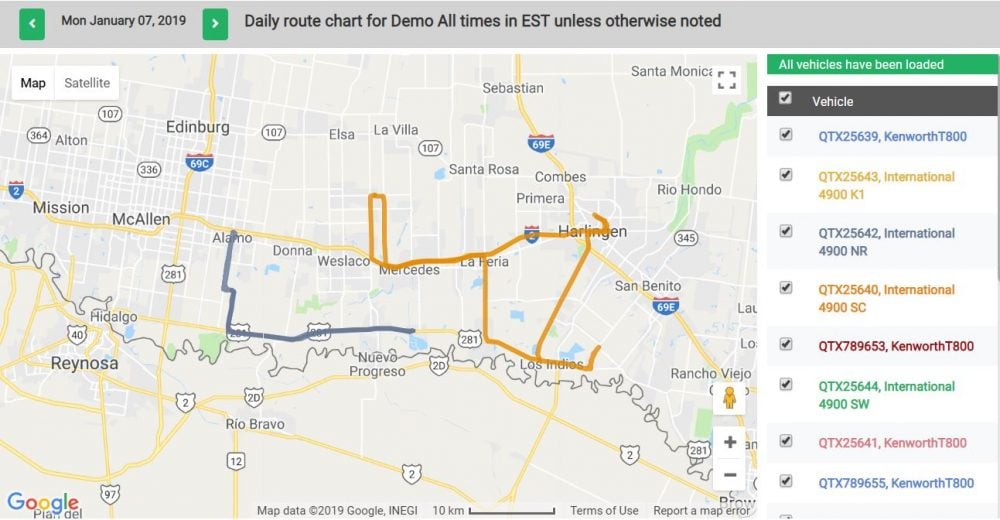
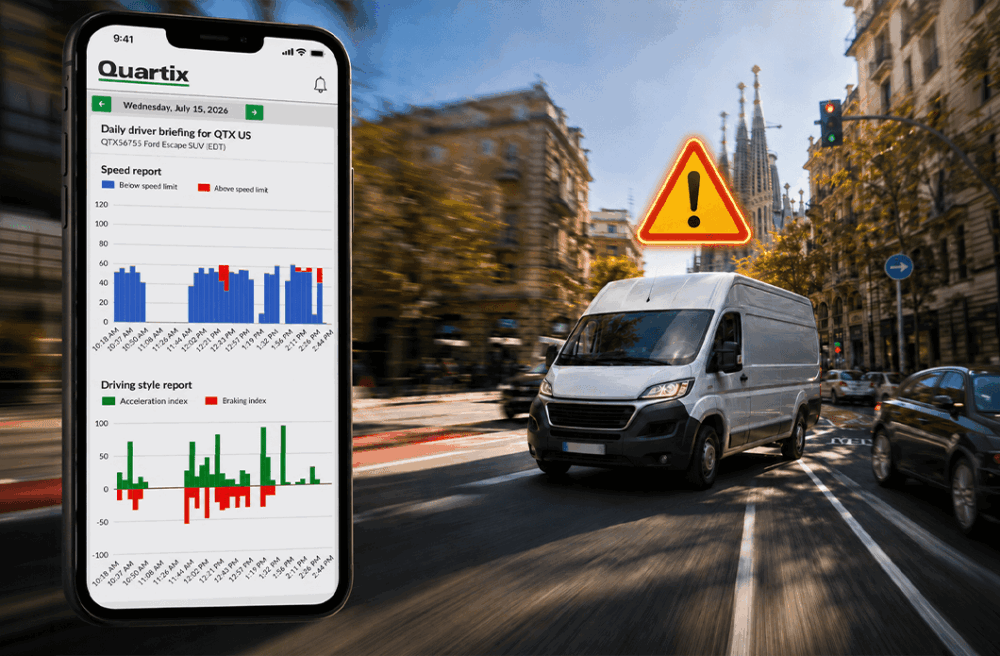
Driving-style analysis lets you identify who is speeding or braking hard and give specific, fair feedback rather than a blanket memo. Driver scores and league tables tend to drive improvement on their own. Most people want to rank well against their peers and will adjust once they can see where they stand. The effect on fuel is not marginal. Tighter driving typically delivers meaningful double-digit savings. Smoother driving also reduces wear on brakes, tires and the drivetrain. Route analysis does the parallel job on the dispatch side, surfacing the journeys that waste time and fuel so you can plan them out of the schedule.
The discipline that lowers your fuel bill turns out to lower your risk profile as well, which is a rare case of one effort paying off twice.
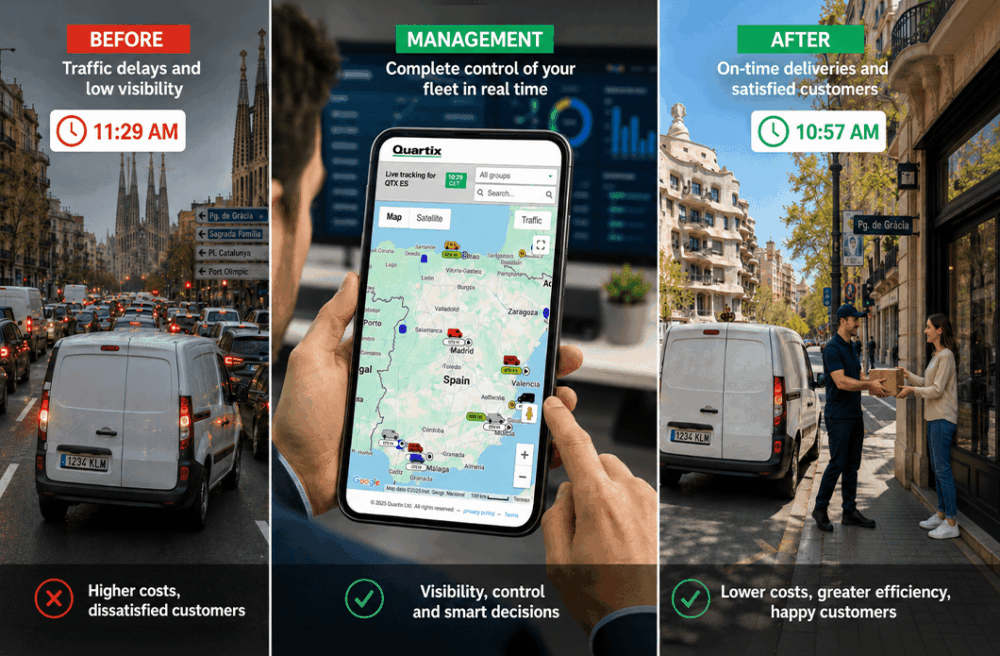
If the full list feels like a lot, start with the one that’s easiest to measure and most often ignored. Idling is a useful first target because the math is so plain. An engine idling burns fuel while producing zero work, and across a fleet those minutes add up fast: a handful of vehicles idling thirty or forty minutes a day, five days a week, quietly turns into a meaningful fuel line all on its own, before you count the extra engine hours pulling services forward. The reason it persists is simply that nobody sees it. It doesn’t show up on a fuel receipt as “idling,” it hides inside the total. Once you can measure idle time per vehicle, you can set a sensible target, share it with drivers, and watch the number fall, because most idling is habit rather than necessity. It’s the closest thing to free money a fleet has, and it’s a good way to prove to a skeptical team that the data leads to fair, concrete improvements rather than blame.
Day-to-day efficiency matters, but so does avoiding the large, unpredictable expenses that blow a budget apart. Unplanned downtime is the classic example: a vehicle off the road without warning disrupts the schedule and sets off a chain of knock-on costs that are hard to quantify and harder to recover. Catching defects early through quick routine inspections, and staying ahead of service intervals with maintenance reminders tied to actual mileage, keeps small problems from turning into expensive ones at the worst possible moment.
Insurance belongs in the same conversation. A documented record of safe driving and low incident frequency strengthens your position at renewal, and verified location data helps resolve disputed claims faster and for less. The discipline that lowers your fuel bill turns out to lower your risk profile as well, which is a rare case of one effort paying off twice.
No single one of these transforms a budget on its own. Trimmed idling, smarter routes, smoother driving and verified mileage are each modest. Run them across a whole fleet over a full year, though, and they compound into real, bankable savings. Plenty of operators have taken thousands of dollars out of their fuel and maintenance costs this way, not through one dramatic change but through steady, measured improvement.
The discipline that makes the difference is consistency: measure honestly, act on what you find, and treat cost control as an ongoing habit rather than an annual scramble. The first step never changes, which is getting clear visibility of where the money is actually going. Once you can see it, most of it is manageable. Our guide to reducing fuel and maintenance costs walks through the specifics if you want to go deeper.

We’ll help you decide which vehicle tracking option is right for you


Top-rated fleet tracking, zero setup fees. Limited time offer for new customers.
Get the discount